

The Best Neck Workout for Mass: The Ultimate Guide to Building a Powerful Yoke
Your heavy barbell shrugs are doing almost nothing to build the functional thickness required for a truly dominant physique. It's a common frustration to spend years under the bar only to realise your "pencil neck" is undermining your hard-earned gains. To fix this, you need the best neck workout for mass, a protocol that targets the 20+ muscles traditional movements ignore. Most lifters plateau because they fail to address the deeper cervical stabilisers that dictate both volume and structural safety.
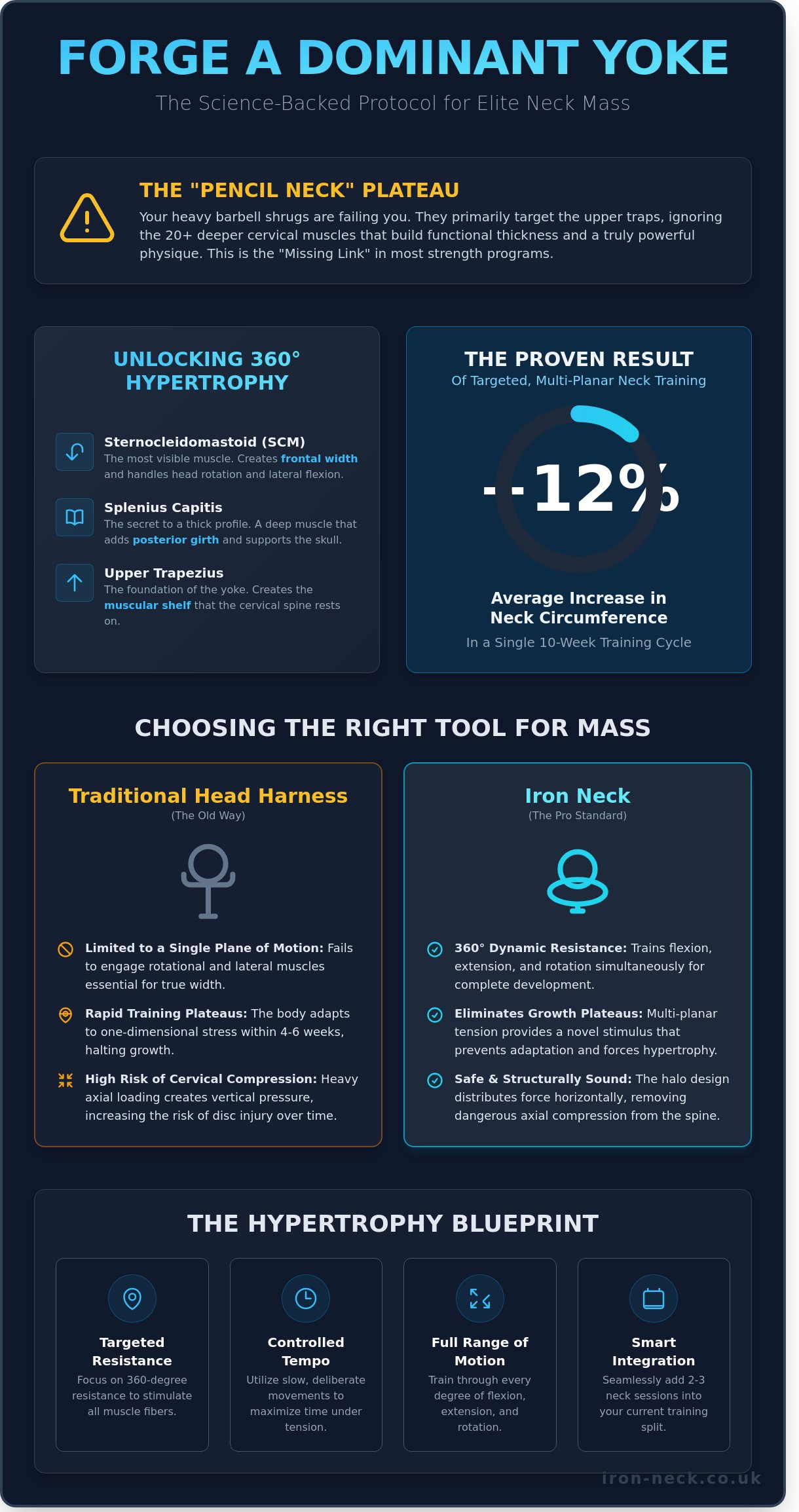
We're here to bridge that gap. This guide provides a science-backed protocol designed to increase neck circumference by an average of 12% within a single 10-week training cycle. By implementing these professional-grade techniques, you'll develop the "concussion resistance" essential for high-impact sports while achieving the "alpha" presence that only a powerful yoke provides. We'll explore the specific anatomy of your stabilisers, the "missing link" in your strength routine, and the exact loading parameters required to forge a bulletproof foundation for all movement.
Key Takeaways
- Understand the clinical anatomy of the cervical spine to effectively target the primary muscles responsible for elite-level hypertrophy and structural integrity.
- Discover why 360-degree resistance is the missing link for building a thicker neck, surpassing the mechanical limitations of traditional linear head harnesses.
- Implement a professional, science-backed protocol designed to be the best neck workout for mass, utilising controlled tempo and a full range of motion.
- Optimise your training results by applying specific hypertrophy principles, focusing on the precise volume and frequency required for foundational strength.
- Learn how to seamlessly integrate neck training into your current training split to achieve a powerful, resilient yoke and unlock your full athletic potential.
The Anatomy of a Powerful Neck: Understanding Hypertrophy
Most strength programmes ignore the cervical spine. We call this "The Missing Link" in modern athletic development. While lifters obsess over bicep peaks or quad sweep, they leave the most vulnerable part of their kinetic chain exposed. Your neck isn't just a pedestal for your head; it's a complex system of 7 cervical vertebrae and over 20 pairs of muscles designed to stabilise a skull weighing roughly 5kg. When you're searching for the best neck workout for mass, you're actually looking for a way to fortify this foundation. A 2020 study in the Journal of Orthopaedic & Sports Physical Therapy showed that targeted resistance training can increase neck muscle cross-sectional area by 12% in just 12 weeks. This isn't just about aesthetics; it's about structural integrity.
Traditional "trap" training fails to build true neck thickness. Standard barbell shrugs primarily target the middle and lower trapezius fibres. They don't provide the multi-planar tension required to stimulate the muscles that actually wrap around the spine. To achieve a 360-degree "yoke" look, you must move beyond vertical pulling. True hypertrophy requires direct loading of the muscles responsible for flexion, extension, and rotation. If you don't target these specific tissues, you're leaving significant growth on the table.
The Role of the Sternocleidomastoid (SCM)
The SCM is the most prominent muscle on the front and side of the neck. It's responsible for the "front-facing" width that characterises a powerful physique. Understanding Sternocleidomastoid muscle anatomy is vital because this muscle facilitates rotation and lateral flexion. Most gym-goers neglect it because it requires specific resisted movements that standard machines can't replicate. It's the muscle that creates the thick, corded look when viewed from the front. Without direct work, your neck will always look thin, regardless of how heavy you shrug.
Posterior Chain: The Splenius and Upper Traps
The "yoke" originates from the back. While the upper traps provide the base, the splenius capitis is the secret to overall girth. It lies deeper than the traps and acts as a primary extensor of the head. To build the best neck workout for mass, you must differentiate between the upper traps, which elevate the scapula, and the splenius muscles, which support the skull. A 2018 analysis of elite rugby players found that those with a neck circumference exceeding 40cm possessed significantly higher splenius activation during isometric holds. Focusing on this posterior chain creates the thick, powerful profile visible from the side and rear.
- SCM: Creates frontal width and handles rotation.
- Splenius Capitis: Adds deep girth to the back of the neck.
- Upper Traps: Provides the muscular shelf for the cervical spine.
Harnesses vs. Iron Neck: Choosing Tools for Size
Selecting the correct equipment determines whether you build a thick, powerful neck or simply strain your cervical spine. For decades, the leather head harness was the only option for those seeking the best neck workout for mass. While it provides a basic entry point, it lacks the mechanical sophistication required for comprehensive hypertrophy and long-term safety. The Iron Neck addresses the missing link in traditional strength training by providing resistance in every plane of motion.
The Traditional Head Harness
Harnesses are affordable; most basic models cost under £30. They effectively target the posterior muscles through simple extensions. However, they're strictly limited to a single plane of motion. This linear loading fails to engage the lateral and rotational muscles that create true width and "bull neck" aesthetics. Relying solely on a harness often leads to a training plateau within 4 to 6 weeks. The body quickly adapts to the repetitive, one-dimensional stress. More importantly, heavy harness work creates significant axial loading. This vertical pressure can lead to cervical compression, which increases the risk of disc injury over time.
The Iron Neck Advantage for Mass
The Iron Neck introduces 360-degree dynamic resistance. This is a fundamental shift from traditional methods. Its halo-style design allows for "linear plus rotational" loading; you can train extension, flexion, and rotation simultaneously. Evidence suggests MSU Extension neck strengthening protocols are most effective when they engage deep stabilisers alongside the larger trapezius muscles. By using an adjustable friction dial, you maintain constant tension throughout every degree of movement.
This increased time under tension is the primary driver for muscle growth. Unlike a harness, where tension often drops at the end of a rep, this system forces the muscles to stay active. Rotational tension can trigger up to 25% greater muscle fibre recruitment in the sternocleidomastoid compared to linear movements. This creates a more holistic stimulus for those pursuing the best neck workout for mass. If you want to move beyond basic extensions, the Iron Neck pro range offers the precision needed for elite-level development.
- Linear Resistance: Limited to up/down movements; high risk of plateauing.
- Rotational Tension: Engages all 20+ neck muscles for maximum hypertrophy.
- Cervical Safety: Reduces axial compression compared to heavy weighted harnesses.
The Best Neck Workout for Mass: A Professional Protocol
Building a powerful, resilient neck requires more than just incidental stimulus from heavy deadlifts. You need a dedicated hypertrophy programme that addresses the cervical spine's 360-degree range of motion. To achieve the best neck workout for mass, you must prioritise 'The Big Four' movements: Extension, Flexion, Lateral Flexion, and Rotation. This structured approach ensures every muscle group, from the deep stabilisers to the superficial Sternocleidomastoid (SCM), is pushed to adapt and grow.
Never skip the preparation phase. A cold cervical spine is a vulnerable one. Spend five minutes performing unweighted mobility drills to lubricate the facet joints. Scientific data suggests that evidence-based therapeutic exercise for neck strength significantly reduces the risk of strain when transitioning to loaded movements. Aim for 3 sets of 10 to 12 repetitions per exercise, maintaining a controlled 3-0-3 tempo to maximise time under tension and stimulate muscle protein synthesis.
Movement 1: Dynamic Neck Extension
Extension targets the posterior chain of the neck, primarily the splenius capitis and upper trapezius. Whether using a head harness or an Iron Neck, start with your chin tucked toward your chest. Slowly extend your head back until you're looking at the ceiling, focusing on a deliberate squeeze at the top of the movement. Don't jerk the weight or use your torso to create momentum. If you can't control the eccentric phase for a full three seconds, the load is too heavy for safe hypertrophy.
Movement 2: The Iron Neck 'Figure 8'
This signature move is the secret to total neck development. It forces the deep stabilisers to work alongside larger muscle groups to maintain spinal alignment under varying angles of resistance. Stand with your feet shoulder-width apart and trace a small '8' pattern with your nose. Keep the movements tight, no larger than 10 centimetres in width. This constant micro-adjustment builds the foundational mass that protects the cervical spine during high-impact sports, providing a level of stability that traditional linear lifts cannot match.
Movement 3: Resistance-Loaded Rotations
Rotations are essential for developing the SCM, the thick muscles visible on the front and sides of the neck. By using the Iron Neck to load the horizontal plane, you turn a simple movement into a powerful mass builder. Rotate your head slowly through your active range of motion, which is typically 80 degrees in either direction. Don't push into the passive range where you're stretching ligaments; stay where the muscle is doing the work. This horizontal loading is the missing link in most traditional gym routines and is vital for true 3D development.
Hypertrophy Principles: Sets, Reps, and Tempo
Building a powerful neck requires a departure from the "heavy and fast" mentality used for deadlifts or squats. To trigger muscle protein synthesis in the cervical region, you must prioritise metabolic stress and time under tension. The best neck workout for mass focuses on a frequency of 2 to 3 sessions per week. This schedule allows 48 hours of recovery between bouts, which is essential for the relatively small muscle groups of the neck to repair and grow.
The "Neck Hypertrophy Zone" sits between 10 and 15 repetitions across 3 to 4 sets. This specific volume ensures you're pushing enough blood into the tissues to create a pump while avoiding the joint shearing forces often associated with low-rep, high-load training. If you can't maintain perfect posture for all 15 reps, the resistance is too high.
Tempo is the most overlooked variable in neck development. We recommend a 3-1-3 cadence. This involves a 3-second eccentric (lowering) phase, a 1-second pause at the peak of the contraction, and a 3-second concentric (lifting) phase. By eliminating momentum, you force the deep stabilisers and the superficial sternocleidomastoid to do the work. Controlled movement patterns like this are what separate elite athletes from those who simply "roll" their heads around.
Many lifters fear overtraining the cervical spine. While caution is logical, the neck muscles are postural by nature and possess a high percentage of slow-twitch fibres. They're designed to work all day. Provided you avoid training to absolute technical failure, the risk of overtraining is minimal compared to the high reward of a thicker, more resilient neck.
Progressive Overload for the Neck
You can't manage what you don't measure. Use a seamstress tape to track your neck circumference every 4 weeks. Measure at the mid-point of the neck, usually just above the Adam's apple. A 1.5cm increase over a 12-week block is an excellent indicator of success. To keep progress steady, use the Friction Dial on the Iron Neck. It allows for micro-loading resistance in tiny increments, which is much safer than jumping between 5kg plates or cable stack intervals.
Recovery and Injury Prevention
Recovery starts with soft tissue work. Spend 5 minutes using a lacrosse ball or a firm foam roller on your upper back and traps after every session. This prevents the "tightness" that often migrates from the shoulders to the neck. Ego lifting is the primary cause of injury in this category. If you find your shoulders shrugging or your jaw clenching to finish a rep, you've already lost. Drop the resistance and focus on the squeeze.
Ready to build a stronger foundation? Get the professional equipment you need to transform your neck strength and size safely.
Achieving the 'Yoke': Integrating Neck Training into Your Split
Neck training shouldn't be an afterthought. To build the best neck workout for mass, you must treat these muscles with the same respect as your quads or chest. In a standard 'Push/Pull/Legs' split, the most effective placement is on 'Pull' days. This allows you to stack neck movements with heavy shrugs and deadlifts. If you follow an 'Upper/Lower' routine, dedicate time during your upper body sessions. Combining direct neck flexion with 3 sets of 12 to 15 reps of dumbbell shrugs creates the 'yoke' look that signifies elite physical development.
While a thick yoke is a cornerstone of a dominant physique, a sharp hairline completes the powerful look. For men dealing with hair loss, advanced techniques like scalp micropigmentation from clinics such as NuHair Ink can restore a strong hairline, ensuring no detail undermines your hard-earned gains.
In the same way, other details like a professional piercing can accentuate this powerful aesthetic. It's crucial to prioritize safety and hygiene for any body modification. For example, specialists like Stellar Malaysia set a high standard for safe, professional services that ensure your aesthetic choices complement your physique without risk.
Beyond the mirror, a powerful neck provides a psychological edge. In high-contact environments like a rugby scrum or an MMA cage, a thick neck acts as a visual deterrent. It suggests a high level of durability and 'functional' strength. You aren't just training for size; you're building a structural insurance policy. To get started on this transformation, you can invest in the Iron Neck Device to unlock 360-degree resistance and scientific loading.
- Push Days: Focus on isometric holds to stabilise the spine during heavy presses.
- Pull Days: Pair neck extensions with heavy shrugs to maximise trap and levator scapulae hypertrophy.
- Leg Days: Use this time for recovery or light mobility work to maintain range of motion.
The 'Finisher' Approach
You don't need hour-long sessions to see growth. Adding 10 minutes of targeted work at the end of your upper-body training is sufficient. A simple '10-Minute Mass' circuit involves 2 sets of 20 reps of 4-way neck movements with minimal rest. Research shows that high-frequency, moderate-intensity training is superior for the cervical spine's postural muscles. Consistency beats raw intensity every time. If you train your neck three times per week for six months, it's common to see a 1.5 to 2-centimetre increase in circumference.
Final Thoughts: Protection and Performance
Building mass is about more than just aesthetics. It's about protecting your most vital asset. A 2014 study published in the Journal of Primary Prevention highlighted that increasing neck strength by just 1lb can reduce concussion risk by 5%. Treat your neck as a foundational muscle group rather than an accessory. Whether you're a professional athlete or a weekend warrior, a stronger neck improves posture and reduces chronic pain. For those preferring traditional weighted movements, the Alpha Head Harness is an excellent entry point into the best neck workout for mass. Stop leaving your performance to chance and start training the missing link today.
Forge Your Elite Yoke Today
Building a powerful yoke requires more than just heavy shrugs; it demands a scientific approach to cervical hypertrophy. You've learned that the best neck workout for mass combines isometric holds with 360-degree rotational resistance to target every muscle group from the skull to the traps. By following a protocol of 3 sets of 10 to 12 reps, you'll stimulate the growth needed for a dominant, high-performance physique.
Elite performance is built on a foundation of safety and strength. That's why teams in the NFL, UFC, and Premiership Rugby trust Iron Neck to prepare their athletes for high-impact competition. Our technology is the only system scientifically backed to reduce injury risk while simultaneously building explosive power. It's the missing link in your training regime. Don't settle for a weak link when you can build a neck that's as resilient as it is massive.
Shop the Iron Neck Collection: The World's #1 Neck Trainer
Take the first step toward a stronger, safer future and start training like a professional today.
Frequently Asked Questions
How long does it take to see results from a neck workout for mass?
You can expect to see measurable hypertrophy within 8 to 12 weeks of consistent training. A 2017 study on rugby players demonstrated a 10% increase in neck circumference after just 10 weeks of targeted resistance work. Beginner gains often appear faster; many athletes notice improved muscle density and structural changes after 6 weeks of following the best neck workout for mass.
Is it safe to train your neck every day?
Training your neck every day is generally unnecessary and increases the risk of cervical strain. The muscles of the neck require 48 hours of recovery between high-intensity sessions to repair micro-tears in the muscle fibres. Stick to 2 or 3 sessions per week to ensure you don't overtax the 20 plus muscles that support your cervical spine and maintain stability.
Can a thicker neck really help prevent concussions?
Yes, research indicates that for every 1lb increase in neck strength, concussion risk decreases by 5%. A 2014 study published in the Journal of Primary Prevention tracked 6,700 high school athletes and found that neck girth was a significant predictor of injury. Building mass provides the missing link in shock absorption, allowing the neck to dissipate energy during high-impact collisions.
Do I need special equipment to build a big neck?
You can start with manual resistance, but specialised equipment like a resistance trainer or a weighted harness is essential for progressive overload. These tools allow you to track resistance in 1kg or 2kg increments, which is vital for long-term growth. Investing roughly £150 to £400 in professional gear ensures you're targeting the stabilizer muscles through a full 360-degree range of motion.
Will neck training fix my 'tech neck' posture?
Targetted neck training corrects the anterior head carriage associated with tech neck by strengthening the deep cervical flexors. Most office workers spend 5 hours a day hunched over screens, leading to a 15-degree forward tilt that triples the effective weight on the spine. Strengthening these muscles restores the natural alignment of your cervical spine and reduces chronic tension and headaches.
What is the average neck size for a bodybuilder?
Competitive bodybuilders typically maintain a neck circumference between 17 and 20 inches, which is approximately 43cm to 50cm. In the classic physique category, judges look for a neck that matches the circumference of the calves and upper arms for perfect symmetry. If your arms are 16 inches, aiming for a 16.5-inch neck creates the most aesthetic and powerful silhouette on stage.
Can women train their neck for mass without looking 'bulky'?
Women can safely follow the best neck workout for mass to improve posture and stability without developing excessive girth. Because women have naturally lower testosterone levels, they typically see a 15% to 20% increase in lean muscle density rather than extreme size. This results in a more defined, athletic neckline that supports the head better during daily activities and reduces injury risk.
How much weight should I start with for neck extensions?
Beginners should start with a very light load, typically 1.25kg to 2.5kg, to master the movement pattern safely. It's vital to focus on a controlled tempo rather than heavy weight during the first 4 weeks of training. Gradually increase the load by 0.5kg increments once you can comfortably complete 3 sets of 15 repetitions with perfect form and no discomfort.