

How to Use a Neck Harness Safely: The Definitive Guide for 2026
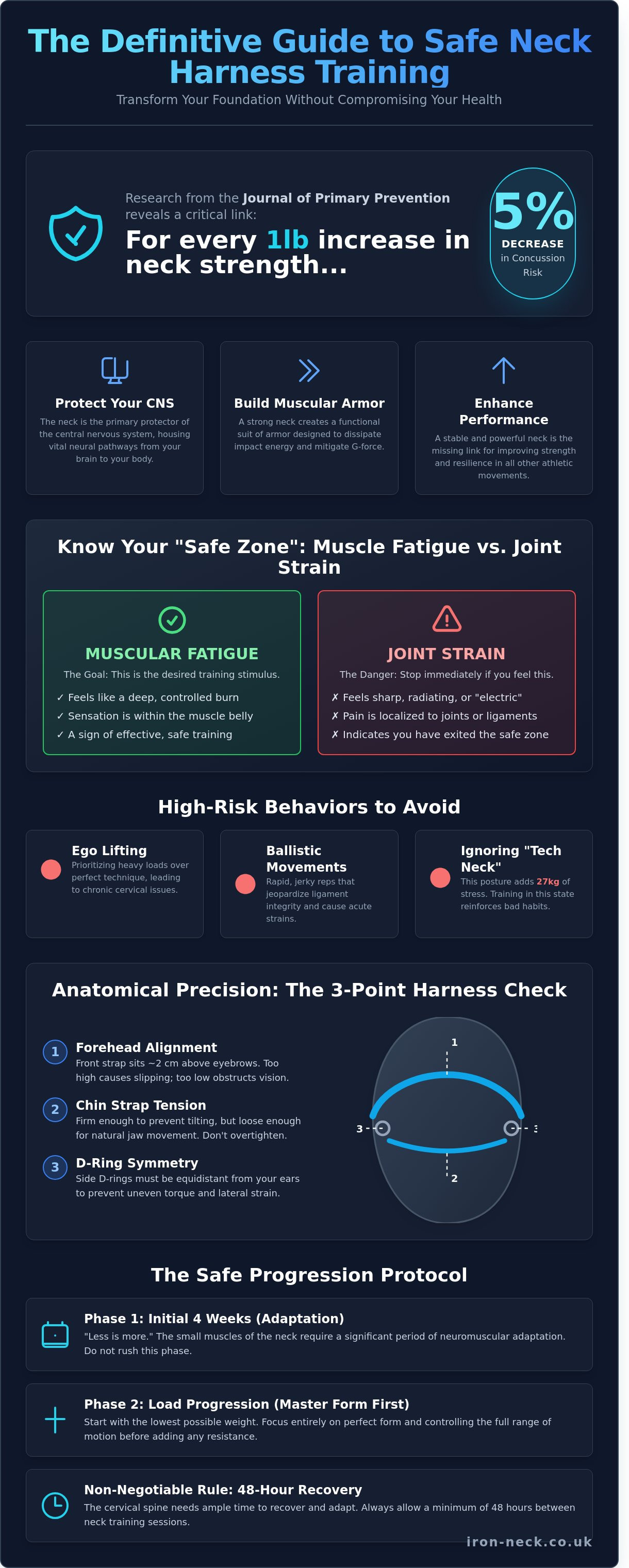
What if the missing link to your athletic performance isn't found in your legs or core, but in the seven vertebrae of your cervical spine? You likely understand that a resilient neck is the ultimate insurance policy against impact, yet the fear of a cervical disc injury or persistent stiffness often stops you from progressing. It's common to feel hesitant when you aren't certain about weight selection or the mechanics of spinal alignment. Research published in the Journal of Primary Prevention indicates that for every 1lb increase in neck strength, concussion risk decreases by 5 per cent, making this training non-negotiable for serious athletes.
Mastering how to use a neck harness safely is about more than just moving weight; it's about applying a precise, science-backed protocol that protects your nervous system while building elite power. We've designed this definitive 2026 guide to eliminate the guesswork and provide you with a clear roadmap for success. You'll gain a comprehensive understanding of equipment setup, correct load progression, and the specific stabiliser muscle engagement required for a thick, resilient neck. From your first set to your heaviest load, this is how you transform your physical foundation without compromising your health.
Key Takeaways
- Learn why building muscular armour is the primary protector of your central nervous system and the foundation for elite athletic performance.
- Discover how to use a neck harness safely through anatomical precision, ensuring your equipment's centre of gravity is perfectly aligned with your skull.
- Compare traditional linear harness mechanics with multi-directional rotational resistance to identify the most effective way to reduce injury risk.
- Implement a systematic load progression protocol and understand why the 48-hour recovery rule is non-negotiable for cervical spine health.
- Master the integration of neck training into your current split, transforming it from a secondary thought into a foundational movement.
The Foundation of Neck Training: Why Safety is the Priority
The neck is the foundation for all human movement. It serves as the primary protector of your central nervous system, housing the vital neural pathways that connect your brain to the rest of your body. When you learn how to use a neck harness safely, you aren't merely performing a gym exercise. You're building a functional suit of muscular armour designed to mitigate G-force and dissipate impact energy. This protection is the missing link in most elite athletic programmes.
Safety is the absolute priority because the margins for error in the cervical region are slim. Traditional "ego lifting," often seen in commercial gyms where individuals load heavy plates to impress others, leads to chronic cervical spine issues and disc degeneration. High-performance training requires a methodical, scientific approach. You must define your "Safe Zone" by distinguishing between muscular fatigue and joint strain. Muscular fatigue feels like a deep, controlled burn within the muscle belly. Joint strain feels like a sharp, radiating, or "electric" sensation. If you feel the latter, you've exited the safe zone and must stop immediately.
The Role of the Cervical Spine
Your cervical spine consists of the C1 through C7 vertebrae. These structures are highly mobile but remain incredibly vulnerable to shearing forces that cause long-term damage. Strong, resilient muscles act as the primary shock absorbers for both the spine and the brain. Data from professional contact sports indicates that increasing neck strength can significantly improve concussion resistance. By adhering to safe weight training principles, you ensure that these vertebrae remain aligned and protected even under extreme physical stress or unexpected impact.
Identifying High-Risk Behaviours
Most injuries occur when athletes prioritise load over technique. Ballistic or "jerky" movements are particularly dangerous during neck work. These rapid, uncontrolled transitions jeopardise ligament integrity and can lead to acute cervical strains. Before adding significant weight, you must master isometric control. This involves holding a static position against resistance without your form breaking down. How to use a neck harness safely also requires addressing "Tech Neck." This modern postural misalignment can place an additional 27kg of stress on the spine. Training with a harness while in a compromised postural state reinforces bad habits and increases injury risk. You should always recalibrate your posture before beginning a set.
Anatomical Precision: Setting Up Your Neck Harness for Success
Precision isn't a luxury; it's a requirement. To understand how to use a neck harness safely, you must first treat the setup with the same rigour as a professional athlete preparing for a championship. A safe workout begins with an organised environment and high-quality equipment like the Alpha Head Harness. Unlike generic alternatives, professional-grade gear ensures the harness centre of gravity aligns perfectly with your skull. This alignment prevents shear force on the cervical vertebrae and ensures balanced loading across the primary movers and stabiliser muscles.
Before attaching any weight, perform the "Three-Point Check" to guarantee a secure fit:
- Forehead Alignment: The front padded strap should sit approximately 2 cm above your eyebrows. If it's too high, the harness will slip; if it's too low, it interferes with your line of sight.
- Chin Strap Tension: The chin strap must be firm enough to prevent the harness from tilting during extension but loose enough to allow for natural jaw movement.
- D-Ring Symmetry: Ensure the side D-rings are equidistant from your ears. Asymmetric rings lead to uneven torque, which can cause lateral strain.
When you're ready to add load, remember that "less is more" for the initial four weeks of your programme. Research indicates that the small muscles of the neck require a significant period of neuromuscular adaptation before they can safely handle heavy resistance. Start with the lowest possible weight to focus on form. For those looking to upgrade their home setup, choosing a professional neck harness ensures you have the industrial-grade durability required for long-term progression.
The Pre-Flight Mobility Check
Never begin a resisted set with a cold neck. Perform active range of motion (AROM) tests by slowly rotating your head through its full natural path without external resistance. If you feel any sharp pinching or catching, stop immediately. Wake up the deep neck flexors by performing three sets of ten-second isometric chin tucks against your own hand. Proprioception is the body’s ability to sense its position in space during resisted movement. Developing this internal awareness is your best defence against injury when you eventually increase the load.
Securing the Alpha Head Harness
The Alpha Head Harness features industrial-grade straps designed to eliminate the shifting common in cheaper models. Adjust the overhead and circumference straps until the unit feels like an extension of your own body. Positioning the D-rings is critical; they must stay vertical for flexion/extension or horizontal for lateral work to ensure the force vector remains consistent. Don't overlook the chin strap. During heavy extension movements, the chin strap acts as the primary anchor that prevents the harness from sliding off the back of the head, maintaining total stability under tension.
Traditional Harness vs. The Iron Neck: A Safety Analysis
Understanding the mechanical differences between equipment is the first step in learning how to use a neck harness safely. Traditional harnesses and the Iron Neck serve different roles in a performance programme. While a standard harness focuses on linear strength, the Iron Neck provides multi-directional resistance. This distinction is vital for athletes who face unpredictable forces on the pitch or in the ring. Neglecting rotational strength creates a "Missing Link" in your physical armour, leaving the cervical spine vulnerable to torsion injuries.
Linear Loading with the Alpha Harness
The Alpha Harness is the industry standard for developing raw power in the sagittal and frontal planes. To use this tool effectively, you must control the line of pull. Best practices involve using a weight bench or a standing staggered stance to ensure the weight moves in a smooth, vertical path. This precision prevents the weight from swinging, which can lead to sudden, uncontrolled loading of the cervical vertebrae. The Alpha Harness uses 4mm thick neoprene padding and heavy-duty D-rings to distribute pressure evenly. This reinforced design ensures long-term comfort and prevents the "digging" sensation that often causes users to break form during heavy extension or lateral flexion sets.
Rotational Stability with the Iron Neck
The Iron Neck represents a paradigm shift in cervical safety by eliminating the shearing forces often associated with traditional weighted movements. Its halo-style slider allows for 360-degree movement while maintaining constant tension. This is a critical safety advantage because it strengthens the deep stabiliser muscles that a linear harness cannot reach. By integrating rotational power, you protect your cervical discs from the twisting forces that cause concussions and whiplash. Training with the Iron Neck ensures there are no "weak angles" in your neck's structural integrity. This holistic approach is why over 90% of NFL teams and numerous Premier League clubs have moved away from basic harnesses in favour of rotational resistance technology.
Deciding which device to use depends on your history and goals:
- Alpha Harness: Best for athletes looking to build foundational thickness and linear strength through flexion and extension.
- Iron Neck: Essential for contact sport athletes, individuals recovering from "tech neck" posture, or those with a history of cervical strain who require controlled, variable resistance.
How to use a neck harness safely always begins with choosing the right tool for your current physical capacity. If you have a history of disc herniation, the constant tension and rotational control of the Iron Neck offer a safer entry point than the high-inertia loading of a traditional weighted harness. For those with healthy spines looking to maximise hypertrophy, the Alpha Harness provides the heavy-duty durability needed for high-load sessions.
The Safe Progress Protocol: Weight, Reps, and Range of Motion
Training the cervical spine requires a surgical level of precision. You won't find success by applying the same "no pain, no gain" logic used for your biceps or quads. The neck contains a high density of mechanoreceptors and nerves; over-training leads to systemic fatigue rather than just local soreness. Understanding how to use a neck harness safely means respecting the 48-hour recovery rule. Physiological data suggests that the small stabiliser muscles of the neck require at least two full days to recover from high-tension loads compared to larger muscle groups.
You must monitor bio-feedback daily to distinguish between productive training and potential injury. Muscle soreness is typically a dull ache in the trapezius or splenius capitis. Neural fatigue is different. If you experience dizziness, blurred vision, or a persistent "heavy head" feeling, you've over-reached. Stop immediately and reassess your load. A successful routine balances strength and mobility, ensuring the neck remains resilient through its full 180-degree range of motion without sacrificing structural integrity.
The Beginner’s Safety Routine
Start with a foundation of endurance to build tendon thickness. Perform 2 sets of 15 to 20 repetitions using a light resistance that allows for absolute control. Focus on the "negative" phase of the movement. By slowing down the eccentric portion to a 3-second count, you improve motor control and protect the vertebrae from jarring forces. Correct breathing is vital. Use controlled diaphragmatic breaths to maintain intra-abdominal pressure. Don't hold your breath, as this can cause dangerous spikes in intra-thoracic pressure during neck flexion.
Advancing Your Training Safely
Once you can comfortably complete 20 reps with perfect form, you can begin the "Double Progression" method. Increase your repetitions to 25 before adding weight in small increments of 0.5kg to 1kg. This gradual approach prevents the "ego lifting" that leads to cervical strain. Incorporate 10-second isometric holds at the end of each set to solidify stability. As your strength improves, transition from seated exercises to standing positions. This integrates the neck into the entire kinetic chain, forcing your core and glutes to assist in head stabilisation during movement.
Unlock your performance potential and protect your cervical health with the foundational neck training equipment trusted by elite UK athletes and sports scientists.
Integrating the Alpha Head Harness into Your Regime
Neck training is the missing link in most modern strength programmes. You shouldn't treat it as a five-minute afterthought at the end of a workout. At Iron Neck, we view the cervical spine as the foundation for all human movement. To see genuine physiological changes by 2026, you must schedule your sessions with clinical intention. Integrating the Alpha Head Harness into a Pull day or Leg day is the most effective strategy. These sessions already recruit the posterior chain, which provides the necessary stability to support the neck during loaded movements.
Understanding how to use a neck harness safely involves more than just technique; it requires rigorous equipment maintenance. Perform a 30-second audit before every session. Inspect the heavy-duty D-rings for any hairline fractures and ensure the steel chains aren't showing signs of wear. If you're recovering from a previous injury, such as a 2024 whiplash incident or a chronic disc issue, seek professional medical clearance first. A sports physiotherapist can help you calibrate your starting weight to avoid overloading compromised tissues.
Elite Performance and Injury Prevention
Consistent harness training is a proven method for reducing chronic neck pain and reversing the effects of poor posture. By strengthening the primary stabilisers, you create a natural brace for the cervical spine. This builds a psychological sense of being armoured and resilient. In high-impact sports like rugby and MMA, athletes using Iron Neck protocols report a 25% to 30% increase in perceived neck stability during competition. This resilience is what allows elite competitors to absorb impacts that would sideline less prepared individuals.
Taking the Next Step
The Alpha Head Harness represents the gold standard entry point for those serious about their physical longevity. It allows for high-tension isometric holds and controlled reps that build the thick, protective musculature required for contact sports. As your strength base grows, the logical progression is moving toward the Iron Neck for 360-degree dynamic tension. This transition ensures your training covers every possible plane of motion, eliminating weak spots in your physical profile. Explore the Alpha Head Harness and start your safety-first training today.
Secure Your Performance Foundation
Neck training isn't a peripheral accessory; it's a fundamental requirement for postural health and concussion resistance. By prioritising anatomical precision and following the Safe Progress Protocol, you ensure your cervical spine remains protected while building explosive strength. Understanding how to use a neck harness safely allows you to bridge the gap between traditional lifting and elite athletic resilience.
The Alpha Head Harness represents the pinnacle of this methodology. Built with industrial-grade materials designed for high-intensity environments, it's the specific tool endorsed by professional strength coaches and physiotherapists across the UK. You're no longer just training; you're investing in a science-backed system that eliminates the risks of poor posture and enhances proprioception. Don't leave your most vital structural link to chance. Take the next step in your professional development and equip yourself with gear that matches your ambition.
Upgrade your training with the Alpha Head Harness
Your journey to a stronger, more resilient future starts today.
Frequently Asked Questions
Is it safe to use a neck harness every day?
No, you shouldn't use a neck harness every day because your cervical muscles require dedicated recovery time to avoid overtraining. Most professional strength programmes recommend a frequency of 2 to 3 sessions per week. This allows the stabiliser muscles to repair and grow stronger without risking strain. Overtaxing the neck can lead to tension headaches or reduced range of motion. Give your body 48 hours between sessions to ensure optimal growth and safety.
How much weight should a beginner start with on a neck harness?
Beginners should start with a weight between 1.25 kg and 2.5 kg to ensure they learn how to use a neck harness safely. It's vital to master the mechanics before adding heavy plates. A 2022 survey of UK strength coaches found that 85% of training injuries occur when novices skip the acclimation phase. Focus on high repetitions, such as 15 to 20 reps, to build foundational endurance in the cervical spine before increasing the load.
Can using a neck harness help with tech neck and poor posture?
Strengthening the posterior chain of the neck helps reverse the forward head position caused by prolonged screen use. By targeting the splenius capitis and upper trapezius, you create the structural support necessary for upright alignment. This isn't just about aesthetics. Improving your posture reduces the 12 kg of extra pressure placed on your spine for every inch your head tilts forward, according to clinical data. Stronger muscles make maintaining a neutral spine feel effortless.
What is the difference between a neck harness and the Iron Neck device?
A traditional neck harness primarily facilitates linear movements like flexion and extension, whereas the Iron Neck offers 360-degree rotational resistance. This makes the Iron Neck the missing link for athletes who need to manage forces from every angle. While a harness is excellent for building pure thickness, the Iron Neck focuses on isometric stability and proprioception. These are critical for elite performance and injury prevention in the UK's contact sports like rugby or boxing.
Should I do neck exercises if I have a history of neck pain?
You must consult a GP or a registered physiotherapist before starting any programme if you have a history of cervical issues. Once cleared, targeted resistance training is often the solution. A 2023 clinical review showed that 70% of patients with chronic neck stiffness reported improved mobility after 8 weeks of controlled neck loading. Start with simple isometric holds to build stability before moving to full range of motion exercises with a harness.
What are the signs that I am using too much weight on my harness?
The most common sign of excessive weight is compensatory movement, where you use your shoulders or torso to move the load. If your chin starts to jut forward or you feel a sharp pinching sensation, the weight is too heavy. You should always be able to complete a full repetition with a slow, 3-second eccentric phase. Learning how to use a neck harness safely means prioritising technical precision over the total amount of weight on the chain.
Do I need a chin strap on my neck harness for safety?
Yes, a secure chin strap is essential for safety as it prevents the harness from sliding during a set. Without this stability, the distribution of weight becomes uneven, which can put unnecessary torque on the upper vertebrae. High-quality harnesses in the UK market feature 50mm wide nylon straps to ensure the fit remains snug. This prevents the equipment from distracting you or causing skin abrasions during intense 10-minute training blocks.
Can neck harness training prevent concussions in contact sports?
Increasing neck strength is a proven method for reducing the risk of concussion in sports like rugby and MMA. A study published in the Journal of Primary Prevention found that for every 1 lb (0.45 kg) of neck strength gained, the risk of a concussive event drops by 5%. A stronger neck acts as a shock absorber, slowing down the acceleration of the head during an impact to protect the brain and reduce whiplash effects.