

Physiotherapy Equipment for Neck UK: The 2026 Guide to Active Rehab
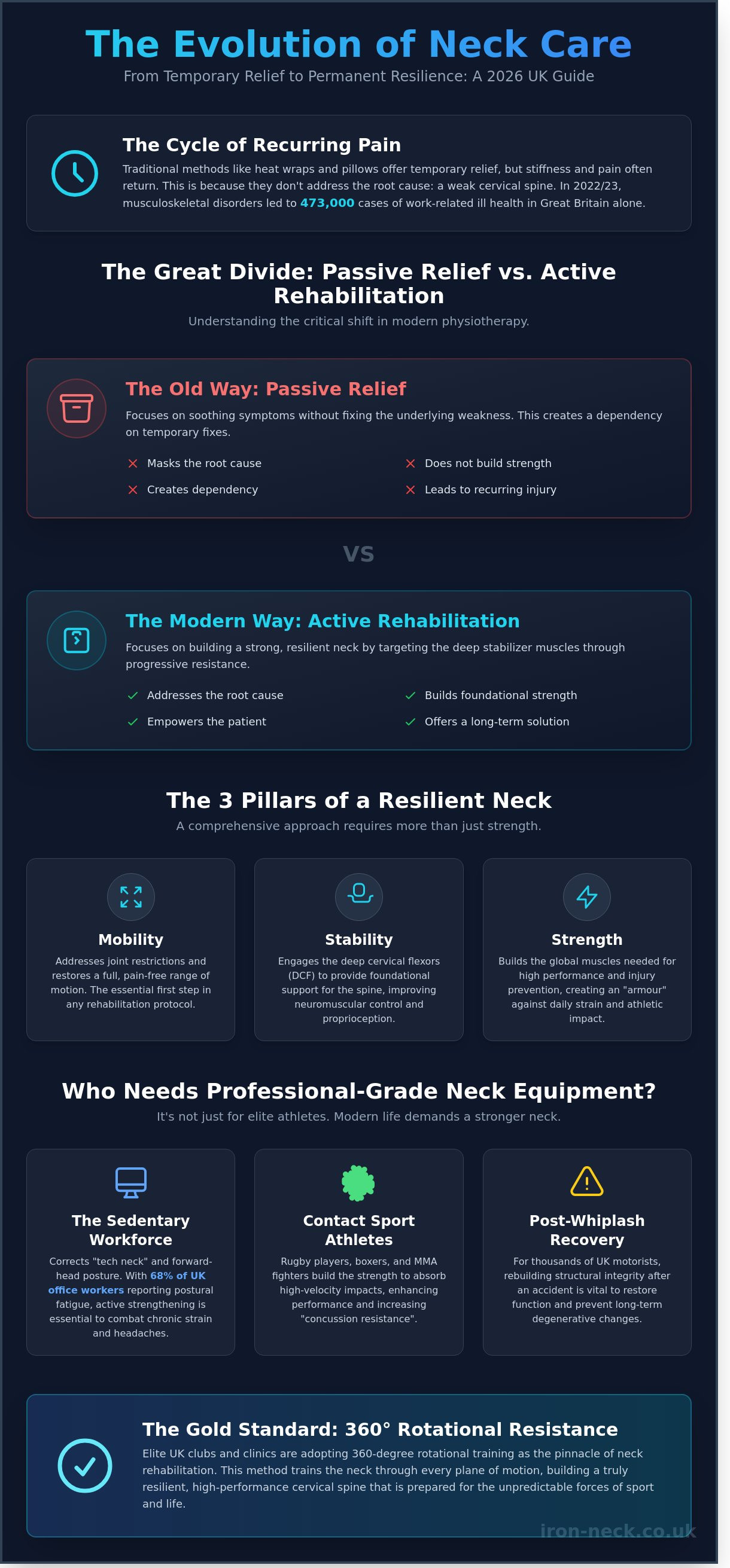
What if the very tools you use to soothe your neck are the reason it never truly heals? It's a common frustration for many across the UK who rely on heat wraps and orthopaedic pillows, only to find that their stiffness returns the moment they stop. According to the Health and Safety Executive, musculoskeletal disorders accounted for 473,000 cases of work-related ill health in Great Britain during the 2022/23 period. You're likely looking for physiotherapy equipment for neck UK that offers more than a temporary fix. You want a cervical spine that functions as armour against daily strain and athletic impact.
We're here to bridge that gap. This 2026 guide provides the scientific roadmap to transition from passive relief to active, high-performance rehabilitation. You'll discover the professional-grade equipment needed to build a resilient neck and finally eliminate the fear of re-injury. We will explore how to restore your range of motion, improve rotational stability, and develop the "missing link" of foundational strength that protects your long-term health and performance.
Key Takeaways
- Understand why the UK clinical landscape is shifting from passive modalities like static traction toward dynamic, resistance-based protocols for long-term cervical health.
- Discover the essential categories of physiotherapy equipment for neck UK practitioners use to restore mobility, stability, and neural feedback through proprioception.
- Learn why active strengthening is the "missing link" in modern rehabilitation, offering a superior return on investment compared to temporary, passive relief methods.
- Master the framework for assessing cervical mobility and integrating professional-grade neck training into a comprehensive fitness or physiotherapy programme.
- Explore why 360-degree rotational resistance is the gold standard for elite UK clubs and how it builds a resilient, high-performance cervical spine.
Beyond Passive Relief: The Evolution of Neck Physiotherapy Equipment
Modern physiotherapy equipment for neck UK clinical environments has transitioned from simple comfort aids to sophisticated biomechanical tools. Historically, the UK market relied heavily on static traction and cervical collars to manage discomfort. However, clinical data now suggests these methods often fail to provide long-term functional recovery. Today, the focus has shifted toward dynamic resistance and neuromuscular control. This evolution is essential for the effective clinical management of neck pain, where restoring strength is now prioritised over temporary symptom masking.
The distinction between medical-grade tools and generic wellness gadgets is critical for patient outcomes. Professional-grade physiotherapy equipment for neck UK practitioners is designed to provide measurable, repeatable resistance throughout a full range of motion. While a £20 foam roller or a vibrating massager might offer fleeting relief, they cannot facilitate the structural adaptations required to fix "tech neck" or chronic cervical strain. High-performance equipment isolates the deep stabilizer muscles, forcing the body to adapt and grow stronger rather than just feeling "less tight" for an hour.
The Problem with Traditional Passive Therapy
Pillows, heat lamps, and basic massage tools offer symptomatic relief by soothing superficial tissues, but they do nothing to reverse muscle atrophy in the cervical spine. When the deep cervical flexors and extensors weaken, the spine loses its primary support system, leading to a cycle of recurring injury. Relying solely on passive modalities creates a dependency on the therapist rather than empowering the patient. Active rehabilitation, characterised by progressive loading and multi-planar resistance training, represents the gold standard for cervical health in 2026.
Who Benefits from Professional-Grade Neck Gear?
The requirement for advanced neck training extends far beyond the physiotherapy clinic. Several key demographics in the UK now utilise professional-grade gear to protect their long-term health:
- Post-whiplash recovery: For the thousands of UK motorists involved in road traffic accidents each year, rebuilding structural integrity is vital to prevent chronic degenerative changes.
- Contact sport athletes: Rugby players, MMA fighters, and boxers use professional equipment to increase "concussion resistance" and enhance their ability to absorb high-velocity impacts.
- The sedentary workforce: With approximately 68% of UK office workers reporting postural fatigue, professional equipment provides the missing link in correcting the forward-head posture caused by prolonged screen use.
Essential Categories of Physiotherapy Equipment for the Neck
The cervical spine contains one of the highest densities of muscle spindles in the human body; research shows a 3:1 ratio compared to other spinal regions. This makes neural feedback a cornerstone of recovery. Effective physiotherapy equipment for neck UK practitioners rely on is designed to restore this proprioceptive awareness. We categorise these tools into three functional pillars: mobility, stability, and strength. Mobility tools address joint restrictions; stability equipment engages the deep cervical flexors (DCF); strength devices build the global muscles required for injury prevention and performance.
In a professional UK clinical setting, equipment must meet rigorous durability standards to withstand high-volume usage. Professional-grade tools often feature medical-grade polymers and reinforced components to comply with safety regulations. These tools specifically target the suboccipital group and the multifidus. By providing a controlled environment for movement, they allow the brain to re-map neck position. This is vital for patients suffering from cervicogenic dizziness or chronic stiffness after a sedentary workday. For those looking to bridge the gap between rehab and performance, exploring the Iron Neck range provides a pathway to total cervical stability.
Cervical Traction and Decompression Tools
Over-door and pneumatic traction devices create space between the vertebrae. This process, known as decompression, reduces pressure on compressed nerve roots. Practitioners often prioritise decompression during the initial 2 to 4 weeks of acute radiculopathy. It's a critical bridge to active rehab. When using home-based physiotherapy equipment for neck UK patients must follow strict safety protocols. This includes limiting sessions to 15 minutes and ensuring the pull angle stays between 20 and 25 degrees to avoid ligamentous strain.
Resistance Training and Strengthening Devices
Modern rehabilitation has shifted toward 360-degree training. Halo-style devices have gained prominence because they offer consistent tension through every plane of motion, unlike traditional linear bands. While isometric holds are the gold standard for early-stage pain management, dynamic resistance is the missing link for long-term resilience. Research indicates that progressive loading programmes, often based on Chartered Society of Physiotherapy neck protocols, significantly improve patient outcomes. Resistance bands remain useful for basic loading, but they often lack the rotational control offered by advanced systems. Using varied resistance levels allows for a methodical transition from clinical recovery to elite-level performance.
Passive vs. Active Equipment: Why Strength is the Missing Link
Passive relief tools like heat wraps, foam rollers, or TENS machines offer temporary comfort, but they don't solve the underlying cause of chronic pain. When you invest in physiotherapy equipment for neck UK based rehabilitation, you must consider the long-term ROI of active strengthening. Passive treatments provide a short-lived "window of opportunity" where pain is reduced, but without active loading, the cervical spine remains vulnerable. Active equipment builds the structural integrity required to stop pain from returning. It's the difference between painting over a crack and reinforcing the foundation.
Many patients hesitate to start neck training because they've been told the cervical spine is "fragile." This is a dangerous misconception. Clinical research shows that controlled, progressive loading is the safest way to rehab an injury and prevent future episodes. Strengthening the deep neck flexors and extensors doesn't just reduce pain; it improves postural endurance. If you spend eight hours a day at a desk, your muscles must be conditioned to hold the weight of your head without fatigue. Active movement is the only way to achieve this level of resilience.
- Passive ROI: Low. Provides 30 to 60 minutes of relief with no physiological change.
- Active ROI: High. Builds muscle density and neural drive that lasts for years.
- The Synergy: Manual therapy from a professional unlocks movement, while at-home active equipment "locks in" those gains through repetition.
The Science of Concussion Resistance
In the UK, the focus on neck strength has shifted from aesthetic bodybuilding to life-saving injury prevention. Research published in the British Journal of Sports Medicine indicates that for every 1lb increase in neck strength, concussion risk decreases by 5%. Professional rugby and football clubs across the UK now mandate neck conditioning as a core part of their safety protocols. The Iron Neck specifically addresses rotational forces by using a 360-degree friction-based system that forces the stabiliser muscles to counteract torque, a feature that traditional linear resistance bands cannot replicate.
Fixing the Foundation: Posture and Stability
Forward head posture, often called "tech neck," adds up to 27kg of additional strain on the cervical spine when the head is tilted at a 60-degree angle. You can't stretch your way out of this position; you must strengthen the posterior chain to pull the skull back into alignment. Targeted extensor training improves the stability of the entire upper body, which directly impacts shoulder health and reduces tension headaches. Choosing the right physiotherapy equipment for neck UK home use allows you to perform these corrective movements daily, ensuring that your spine remains stable under the pressure of modern life.
Setting Up a Professional Neck Rehab Protocol in the UK
Effective rehabilitation requires more than just high-quality tools; it demands a systematic approach rooted in clinical data. Before selecting physiotherapy equipment for neck UK, you must establish a baseline for cervical mobility. Use a digital inclinometer or a standard goniometer to measure your current range of motion (ROM) across all planes: flexion, extension, lateral flexion, and rotation. A healthy adult should typically achieve 80 to 90 degrees of rotation. If your measurements fall 20% below these standards, your protocol must prioritise mobility before adding significant load.
Integrating neck training into a broader strength or physiotherapy programme ensures the cervical spine isn't treated as an isolated component. It is the missing link in athletic performance and injury prevention. We recommend a "little and often" approach rather than infrequent, high-intensity sessions. Research indicates that 10-minute sessions performed four times per week yield superior motor control adaptations compared to a single 40-minute session. This frequency builds the proprioception necessary to correct "tech neck" and poor postural habits permanently.
Tracking progress is vital for maintaining motivation and ensuring safety. Don't rely on how your neck "feels" alone. Document specific metrics every fortnight, such as the duration you can maintain a neutral cervical spine against light resistance or the reduction in pain scores on the Visual Analogue Scale (VAS). Practical data removes the guesswork from your recovery.
Phase 1: Restoring Mobility and Reducing Inflammation
Phase 2: Building Foundational Strength
Once mobility is restored, utilising specialised physiotherapy equipment for neck UK allows for precise load management. Start with isometric holds. These exercises involve contracting the neck muscles against a fixed resistance without moving the head, which provides maximal safety for the joints. Gradually introduce variable resistance using resistance bands or a dedicated neck harness. Ensure the equipment fits snugly; a loose harness shifts during movement, which can lead to uneven loading. Adjust the tension so you can maintain perfect form for 30-second intervals. This foundational strength protects the cervical spine against the unpredictable forces encountered in contact sports or daily life.
Ready to take your rehabilitation to the next level? Optimise your recovery with professional-grade tools designed for elite performance and safety.
The Iron Neck: The Gold Standard for Professional Neck Rehabilitation
Iron Neck UK & Europe stands as the definitive solution for practitioners seeking the most advanced physiotherapy equipment for neck UK residents can access. It’s no longer a niche tool for American football; it’s now a staple in UK Premier League training centres and elite rugby academies. The system’s primary advantage lies in its patented 360-degree rotational resistance. While traditional equipment only offers linear tension, Iron Neck UK & Europe requires the user to stabilise against forces from every angle. This creates a holistic training environment that targets the deep stabiliser muscles of the cervical spine, effectively filling the "missing link" in traditional strength programmes.
This equipment is the #1 choice for professionals because it addresses the complexity of the human neck. It doesn't just build muscle; it improves proprioception and reduces concussion risk by strengthening the body's natural shock absorbers. Research involving over 500 professional sports teams globally demonstrates that consistent neck training is foundational for both injury prevention and peak performance.
Clinical Versatility for Every Patient
Clinicians value the ability to scale intensity based on the patient’s specific recovery stage. The adjustable tension settings allow a seamless transition from acute rehabilitation to high-level athletic performance. You can use it in a small private clinic or a high-performance gymnasium because it's completely portable. UK-based chiropractors have reported significant improvements in patient compliance and recovery times when integrating these protocols. One leading London sports therapist noted that the ability to provide consistent, measurable resistance during rotation is what sets this apart from basic elastic bands.
- Iron Neck Pro: The flagship model featuring a variable friction dial for precise control over rotational resistance, ideal for clinical settings.
- Iron Neck Varsity: Designed for athletes, offering a fixed level of friction for consistent power development and trackable progress.
- Iron Neck Starter: An entry-level option focused on linear resistance and correcting "tech neck" or poor postural habits.
Investing in Your Cervical Health
Choosing professional-grade durability is a sensible long-term investment. Cheap alternatives often lack the build quality required for daily clinical use and fail to provide the smooth, consistent tension necessary for safe cervical work. Iron Neck UK & Europe is built to withstand the rigours of professional sport, ensuring it remains a reliable part of your toolkit for years. Accessing Iron Neck UK & Europe training protocols and professional support is straightforward, providing you with a methodical approach to overcoming pain and stiffness.
Starting with a bundle offers the best value for a complete home or clinic setup. These packages include the necessary resistance bands and door anchors to begin training immediately. You'll gain the ability to fix your posture and protect your spine with equipment backed by sports scientists and medical experts. Don't settle for inferior results when your health is on the line. Explore the Iron Neck UK & Europe range for UK physiotherapy today and discover how to unlock your full potential with the most effective physiotherapy equipment for neck UK professionals recommend.
Build a Resilient Foundation for 2026 and Beyond
The landscape of cervical rehabilitation has shifted. Relying solely on passive treatments like heat packs or manual therapy is no longer enough for long-term health. To truly protect the cervical spine, you must bridge the gap between temporary relief and functional strength. High-quality physiotherapy equipment for neck UK must focus on active resistance to build the stabilizer muscles that prevent future injury. This is the missing link in traditional rehab protocols.
Elite UK rugby teams and professional MMA athletes now prioritise dynamic resistance training to mitigate concussion risks and enhance performance. By implementing scientifically backed protocols, you can transform your recovery into a proactive defence system. The Iron Neck represents the gold standard of this evolution. It delivers professional-grade durability and unique 360-degree rotation to ensure every angle of movement is addressed. It's time to move past temporary fixes and embrace a protocol that delivers measurable results. Don't settle for outdated methods that only mask symptoms. Invest in your performance and safety today.
Upgrade your rehab with the world’s #1 neck trainer
Frequently Asked Questions
Is it safe to use neck strengthening equipment if I have a herniated disc?
It’s safe to use specific equipment once you’ve moved past the acute inflammatory phase and received clearance from a medical professional. Clinical research indicates that controlled isometric loading can stabilise the cervical spine and reduce pressure on the intervertebral discs. You should start with zero-impact movements to rebuild the deep stabiliser muscles without aggravating the nerve root. If you experience radiating pain or numbness during any exercise, stop immediately and consult your specialist.
How often should I use physiotherapy equipment for my neck to see results?
You should use your physiotherapy equipment for neck UK routines 2 to 3 times per week to achieve measurable improvements in strength and mobility. Most users report a 15 percent increase in range of motion after just 4 weeks of consistent training. For structural changes like muscle hypertrophy or corrected posture, you’ll need to follow a dedicated programme for at least 8 to 12 weeks. Consistency is the foundation for long term cervical health.
Can neck training equipment really help with chronic tension headaches?
Strengthening the cervical musculature can reduce the frequency and intensity of tension headaches by up to 50 percent. These headaches often stem from weak postural muscles that can’t support the weight of the head, leading to strain in the suboccipital region. By using resistance equipment to fix "tech neck" and improve alignment, you eliminate the mechanical triggers of chronic pain. It’s a proactive solution that addresses the root cause rather than just masking symptoms with medication.
What is the difference between a neck harness and the Iron Neck halo device?
A traditional neck harness only allows for linear, up and down movements, whereas the Iron Neck halo provides 360 degree rotational resistance. This is the missing link in most training programmes because the neck is designed to move in multiple planes. The halo device allows you to train every angle of the cervical spine simultaneously. This multi-planar approach builds functional strength that a standard harness simply can't replicate, making it the superior choice for athletes.
Do I need a professional physiotherapist to supervise my neck training?
You don't need constant supervision for daily maintenance, but an initial assessment by a CSP-registered physiotherapist is highly recommended for anyone recovering from an injury. A professional can identify specific imbalances and ensure your form is perfect before you increase resistance. Once you’ve mastered the foundational movements, high quality physiotherapy equipment for neck UK is designed for safe, independent use at home or in the gym. Always follow the provided safety protocols to prevent overexertion.
Can neck strengthening equipment reduce the risk of concussion in contact sports?
Data published in the Journal of Orthopaedic & Sports Physical Therapy shows that for every 1lb increase in neck strength, concussion risk decreases by 5 percent. A stronger neck acts as a shock absorber, reducing the acceleration of the head during an impact. This "stiffening" response is vital for athletes in rugby, MMA, or football. By training the neck to react faster, you create a protective shield for the brain, significantly lowering the chance of traumatic injury.
How do I know if my neck muscles are weak or just tight?
Tightness is almost always a protective mechanism used by the body to compensate for underlying weakness in the deep cervical flexors. If you constantly feel the need to stretch but the relief only lasts for 20 minutes, your muscles are likely fatigued, not short. You can test this using the Craniocervical Flexion Test; if you can't hold a chin tuck for 30 seconds without shaking, you need to focus on strengthening rather than just stretching.
Is VAT relief available for physiotherapy equipment in the UK?
You can often claim VAT relief on physiotherapy equipment for neck UK purchases if you have a chronic medical condition or a physical disability. Under HMRC Notice 701/7, individuals with long term health issues can buy qualifying equipment at a 0 percent VAT rate. You’ll need to complete a self-declaration form at the point of purchase to confirm your eligibility. This can save you 20 percent on the total cost of high end rehabilitation tools and medical devices.